The painter of speed and collision sets a scoop of cream on a cone.
Most people who first meet the ⟨Ice Cream⟩ series in Minseok Kang's body of work laugh once, then tilt their heads. Why would the painter who held his ground before the red line of the tachometer suddenly turn to ice cream? A brief detour? A pause for breath?
Neither. And the answer lies not in an idea but in the paint itself. If the previous note followed the place where the car disappears, this fourth note follows what that disappearance leaves behind — and how the remains take on form again. To hold the heaviest time in the lightest of subjects: this is not a story about sweetness, but about memory.
Twins Born with the Painting
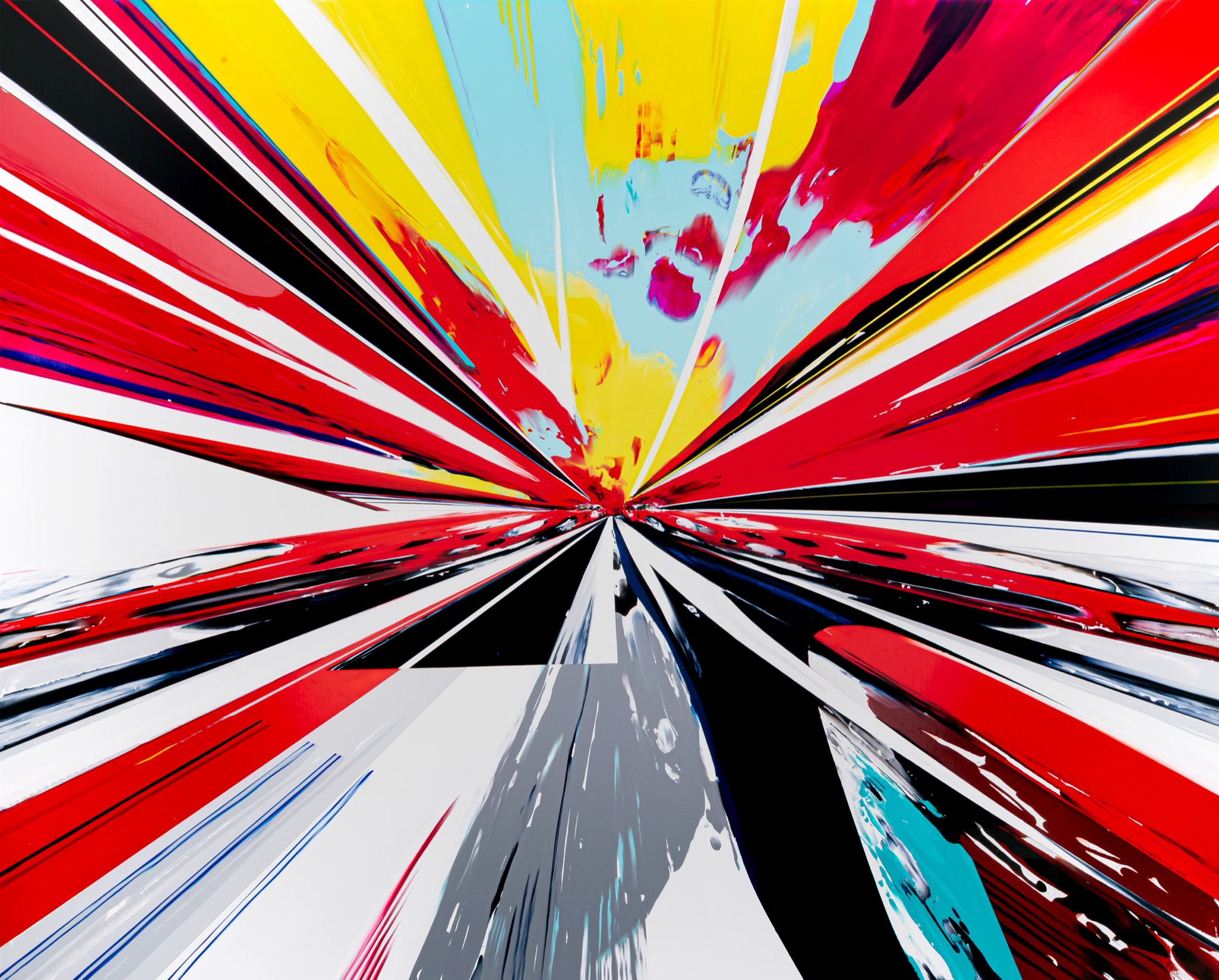
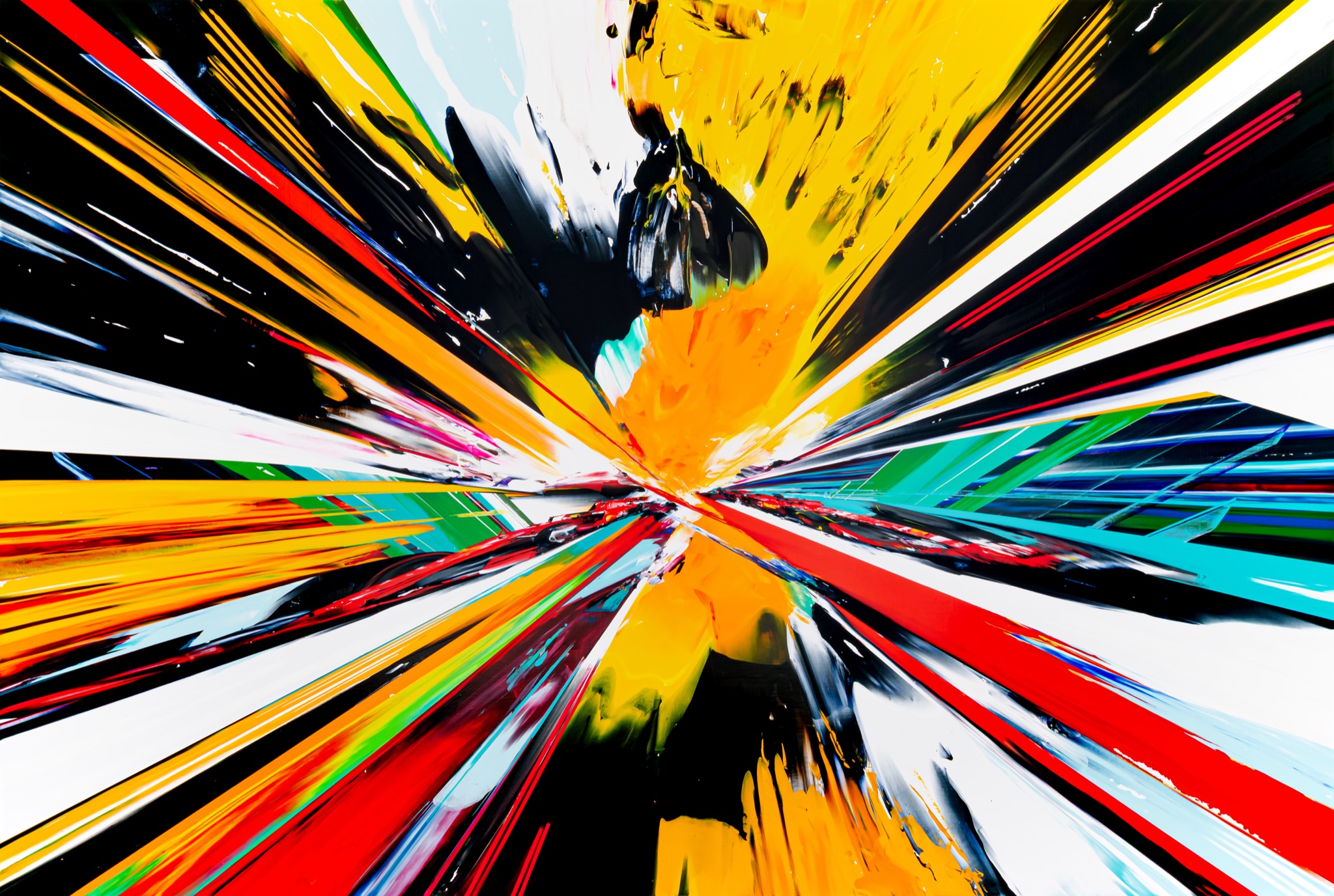
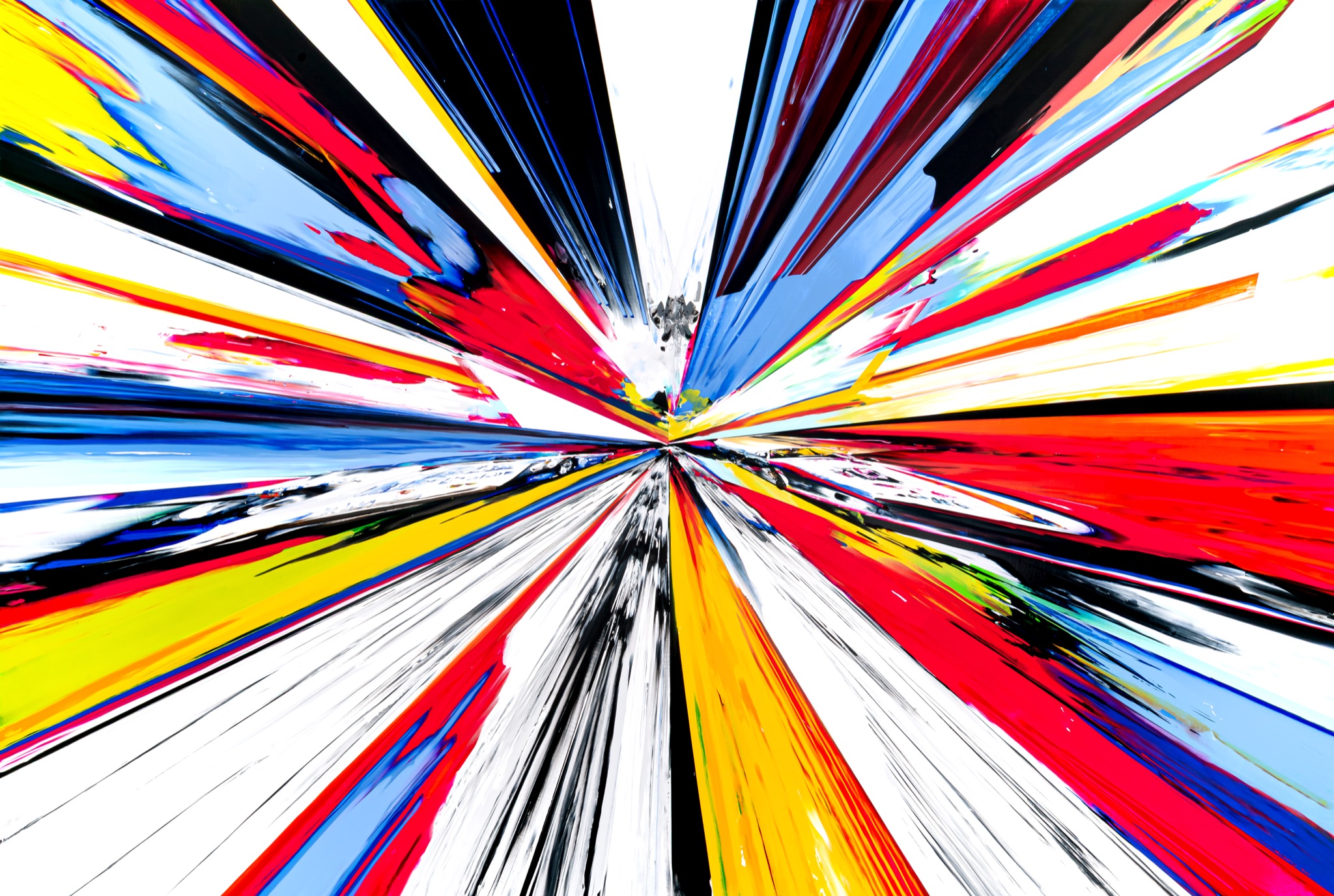
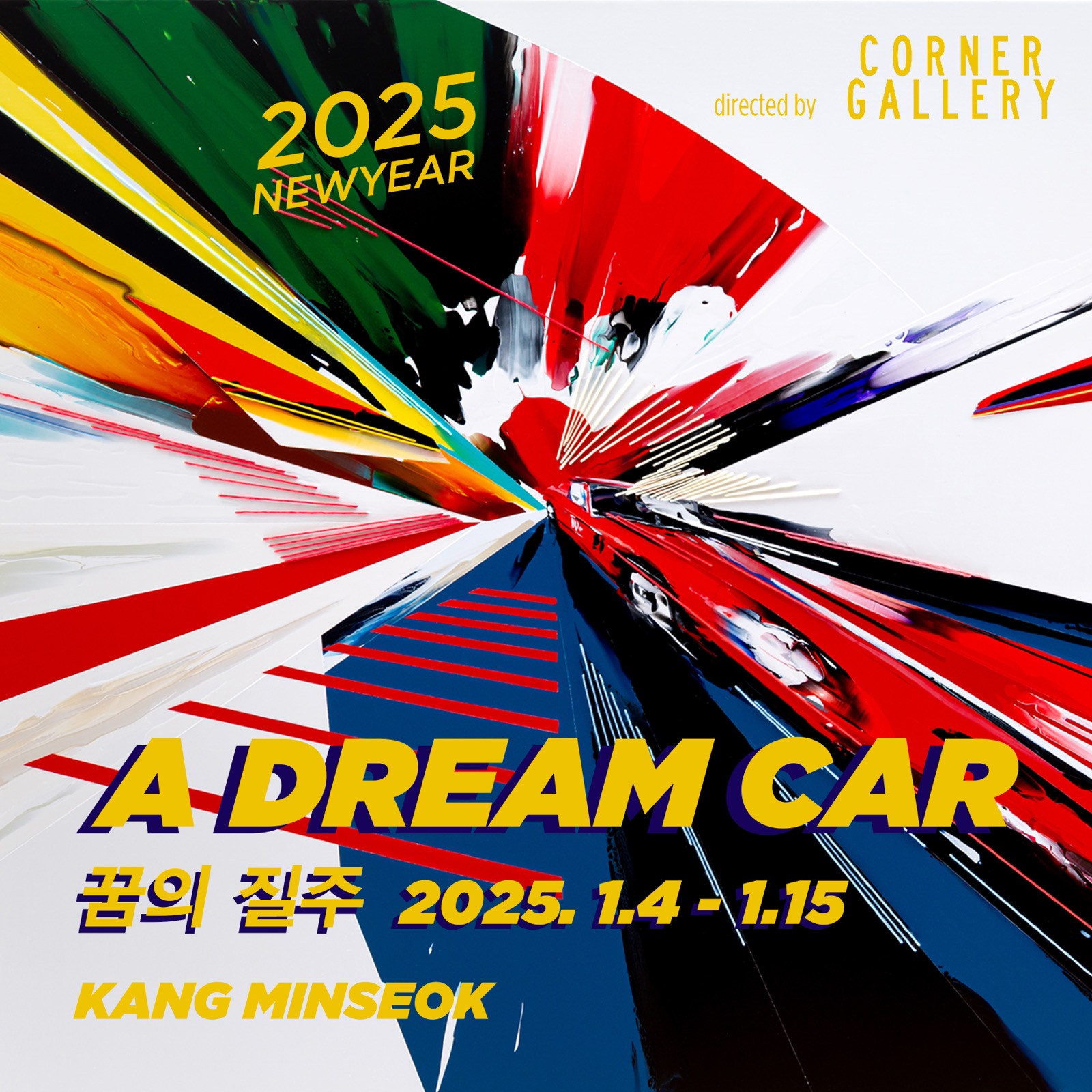
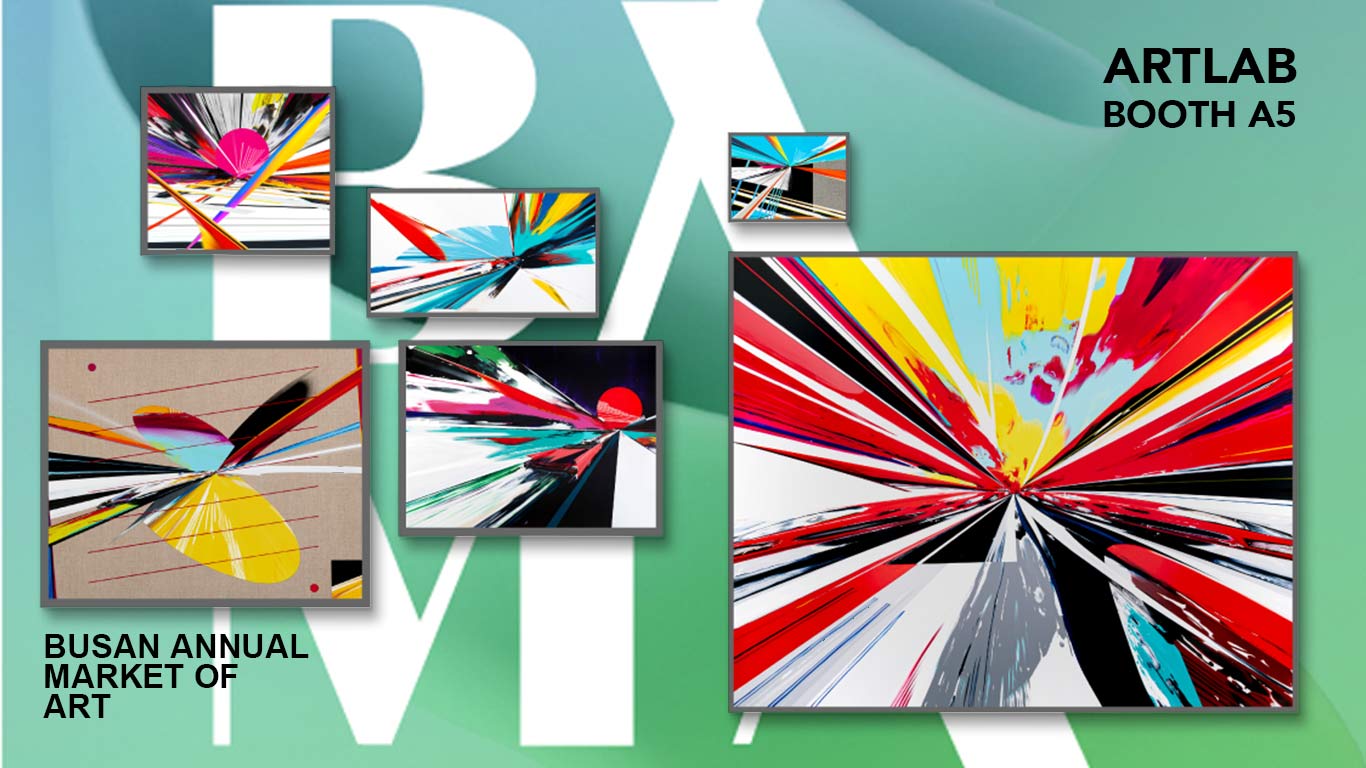
On Minseok's canvas, speed warps the car. Form loosens, and at the boundary between figuration and abstraction the body of the car scatters into light and color. But in that moment of warping, something falls away from the surface, stripped of its force and its substance — the discarded fragments of paint left behind by the squeegee.
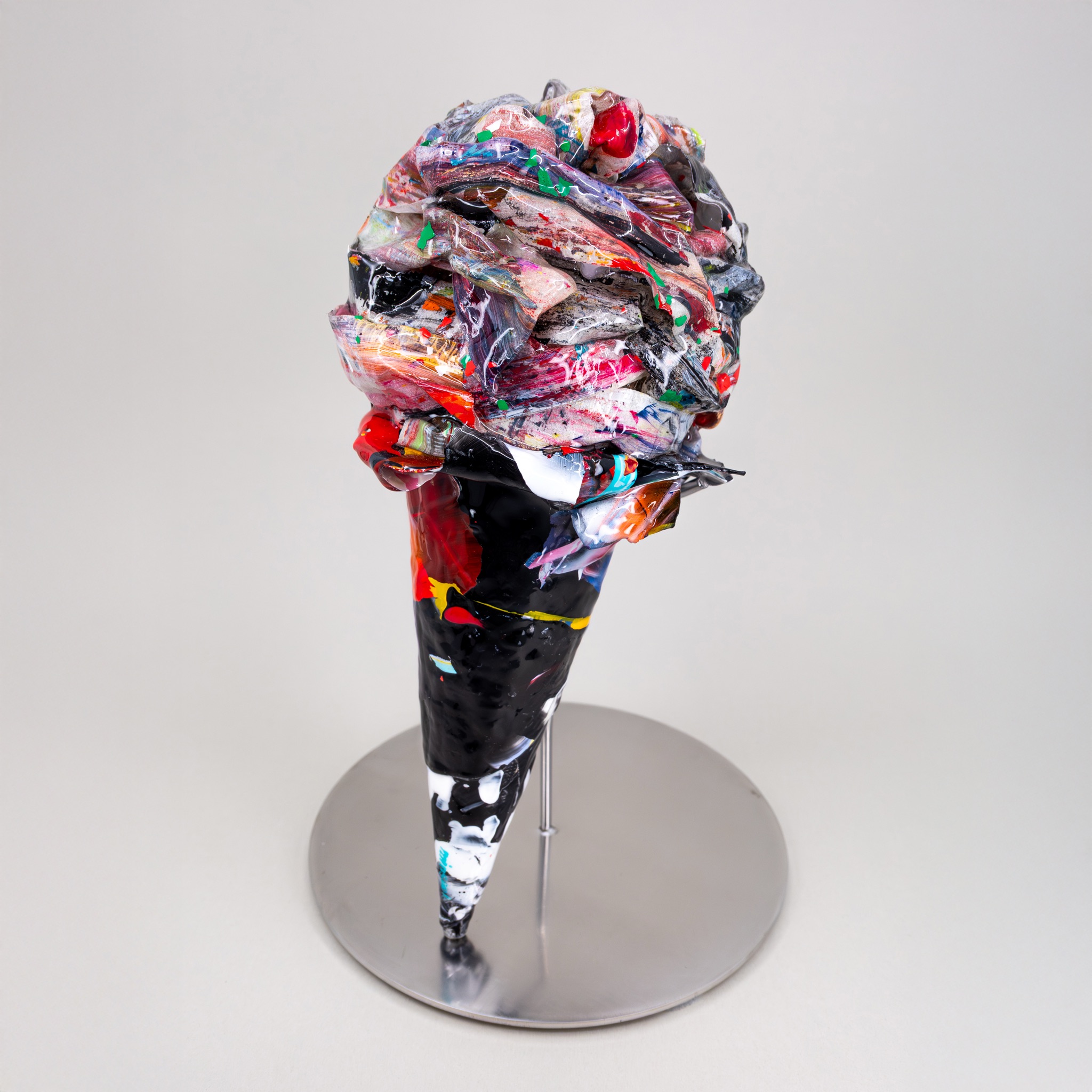
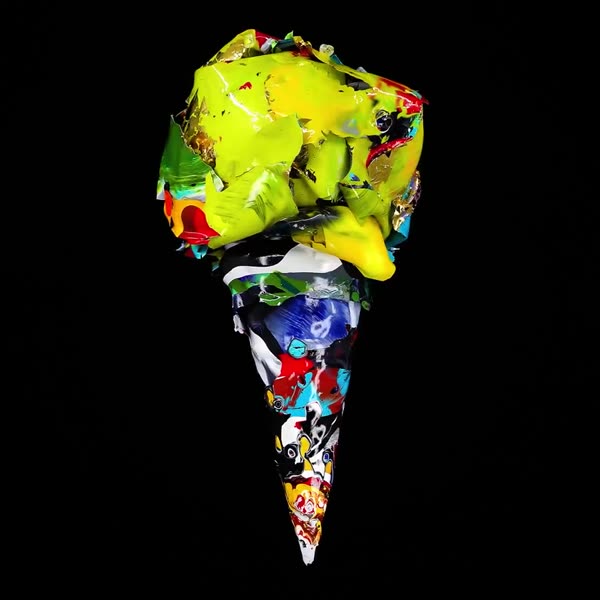
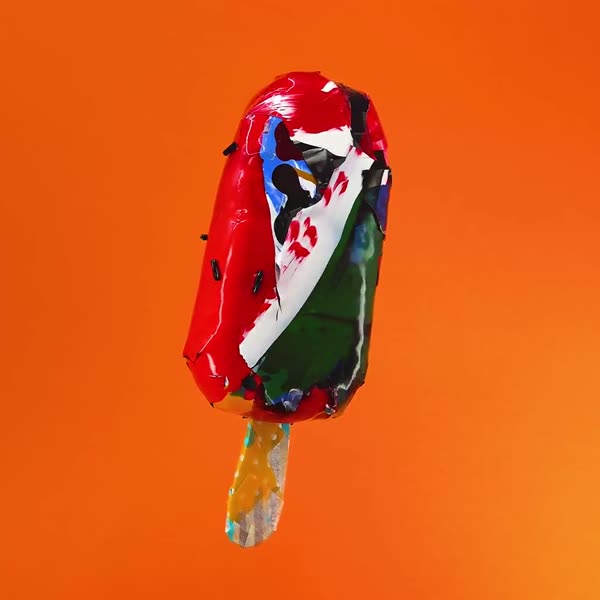
Minseok did not throw those fragments away. He gathered them over a long time, and with them he shaped ice cream. So these ice creams do not come from outside the car paintings; they are made from the crumbs that fell away as the painting was being born. Those fragments hold, in the artist's words, every color from the moment the painting came into being. The ice cream is a twin born together with the painting.
This is the crux. The link between the car and the ice cream is not a story a curator invented afterward. The material proves it. One is a painting that warped as it raced forward; the other is a sculpture shaped from the paint that fell away in that warping. The ⟨Ice Cream⟩ series is therefore the afterlife of the automotive painting — the place where the remains of what vanished are brought back into a form you can hold.
A Childhood the Tongue Brings Back
Then why ice cream, of all things? He could have shaped the crumbs into anything.
Ice cream is a form fastened to nearly everyone's childhood. The urgency of eating it before it melts, the sweet water running down the back of the hand, the collapse of a small world on the day it fell to the ground. That sensation is inscribed in the body before any explanation. A hundred years ago, Marcel Proust wrote of how the taste of a single madeleine dipped in tea could bring back a childhood — its rooms, its streets, its gardens. He called it 'involuntary memory' — not the memory summoned by will, but the memory a sensation throws open without warning. A past the intellect strains toward and never reaches returns in a single instant on the tongue.
Minseok's ice cream is a madeleine you can hold in your hand. It is there not to reproduce a particular flavor, but so that its form might touch the childhood asleep inside anyone. Only, where Proust's madeleine soon dissolved and vanished in the cup, Minseok's ice cream does not vanish. That is the quiet paradox of this series — one we will return to.
What Is Placed On, and What Is Emptied Out
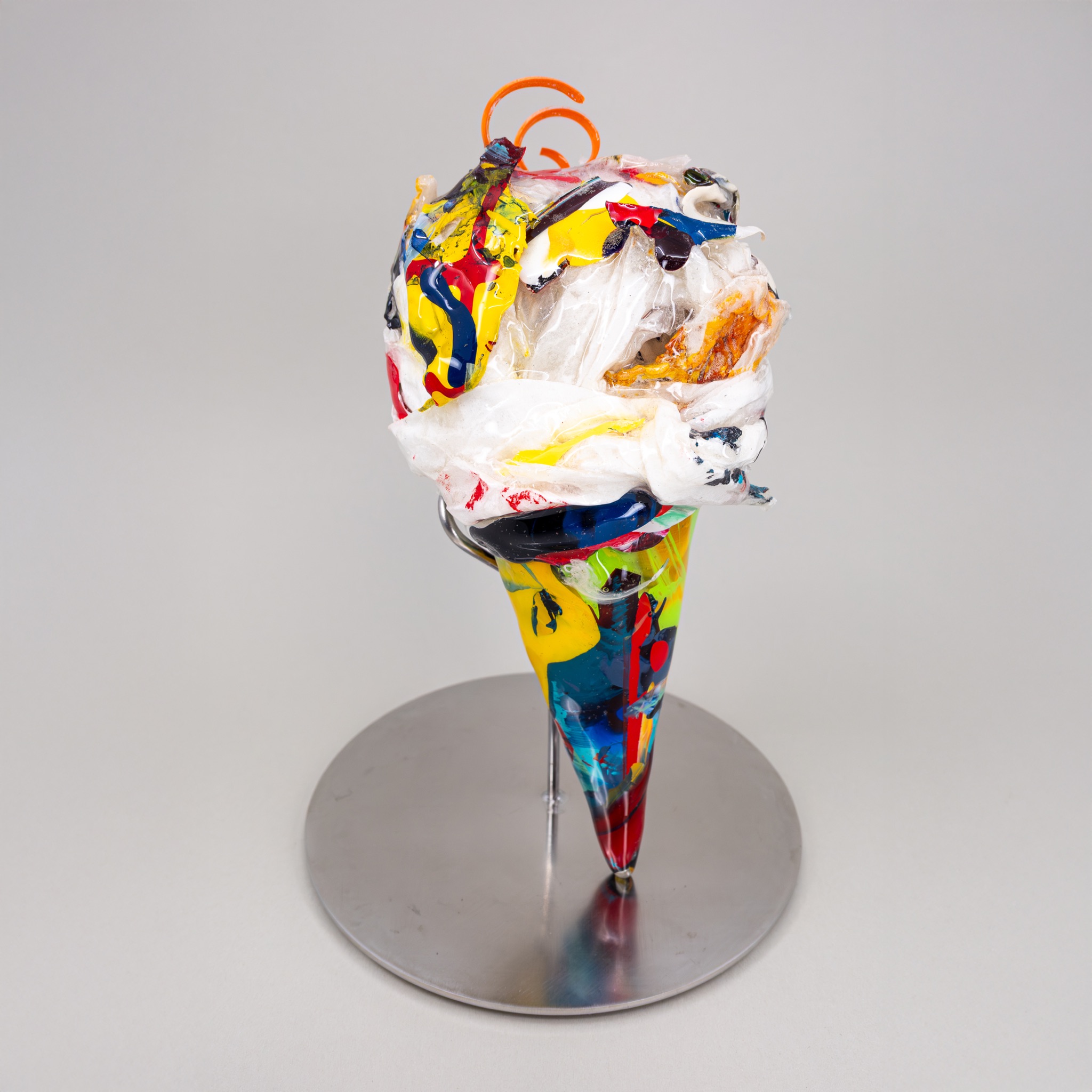
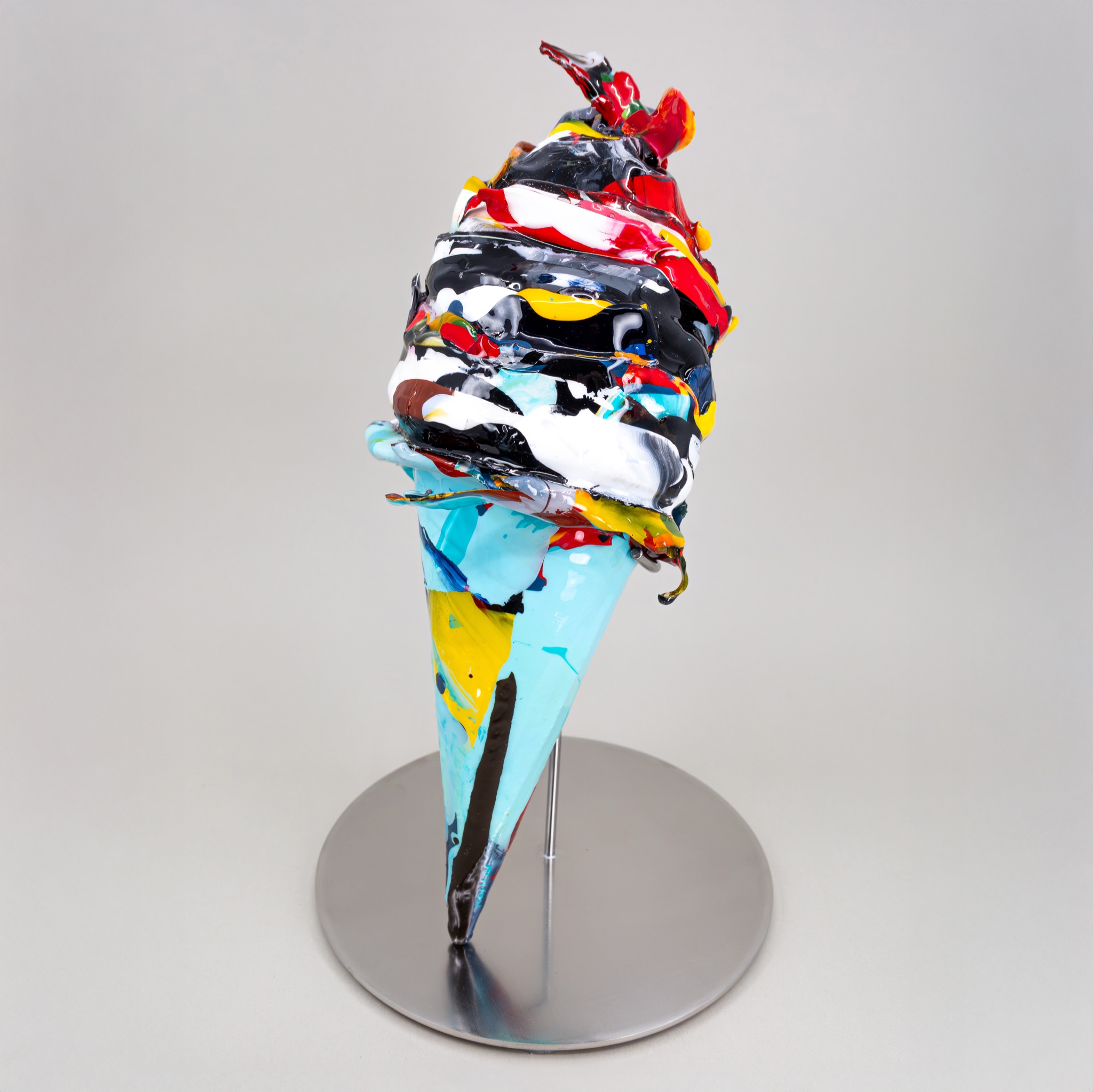
A world of thirteen by thirteen centimeters, on a small stainless base. Wrapped in fragments of paint and set in clear resin, each ice cream holds a single figure. Count Dracula, a UFO, the Olympic flame — icons already registered in our generation's collective memory, condensed into the most harmless of forms. The memory of fear, the imagining of the unknown, the memory of national fervor, all set upon a cone — upon that familiar form which, by its nature, melts away.
But there is another branch to Minseok's ice creams. Some are given no name and no flavor, only a number. Why empty them out? A name, a flavor, a song, the artist says, cages the imagination. The moment you call it 'strawberry,' it is bound to the memory of strawberries, and the viewer loses the room to summon their own. So he empties it. Before an ice cream marked only with a number, the viewer at last draws their own childhood, their own summer, their own lost moment into that empty place.
What is placed on and what is emptied out — the two seem to run in opposite directions, yet they point to the same spot. One summons the memory we share; the other holds out an empty vessel for each person's memory to enter.
This Is Not an Ice Cream
An unspoken sentence runs through this series — this is not an ice cream. Minseok went so far as to make it the very name of an exhibition space. The artist himself thinks of René Magritte: the 1929 painting of a pipe with the words 'This is not a pipe' written beneath it. What Magritte aimed at was the gap between the image and the thing — the painted pipe is only a representation of a pipe, not a pipe. Minseok borrows that gesture of 'this is not a…'. But the place where he ties his knot is not Magritte's. His ice cream is 'not an ice cream' not because of the gap in representation, but because of what it was made from: this was once a car, and before that paint, and that paint was flesh fallen from one person's speed and time.
Set Jean Baudrillard beside him, and Minseok's position comes into focus. Baudrillard described a world in which the sign breaks away from any original and, with no real thing left to point to, replaces reality on its own — a world of copies with the origin gone. Minseok's object stands exactly on the far side of that. His ice cream has a real origin that never disappeared: the warped automotive painting, and the paint that fell from it. In an age when signs drift unmoored from their sources, he binds the object back to its material origin. And so the sentence completes itself — this is not an ice cream. It is the moment you lost.
The Ice Cream That Does Not Melt
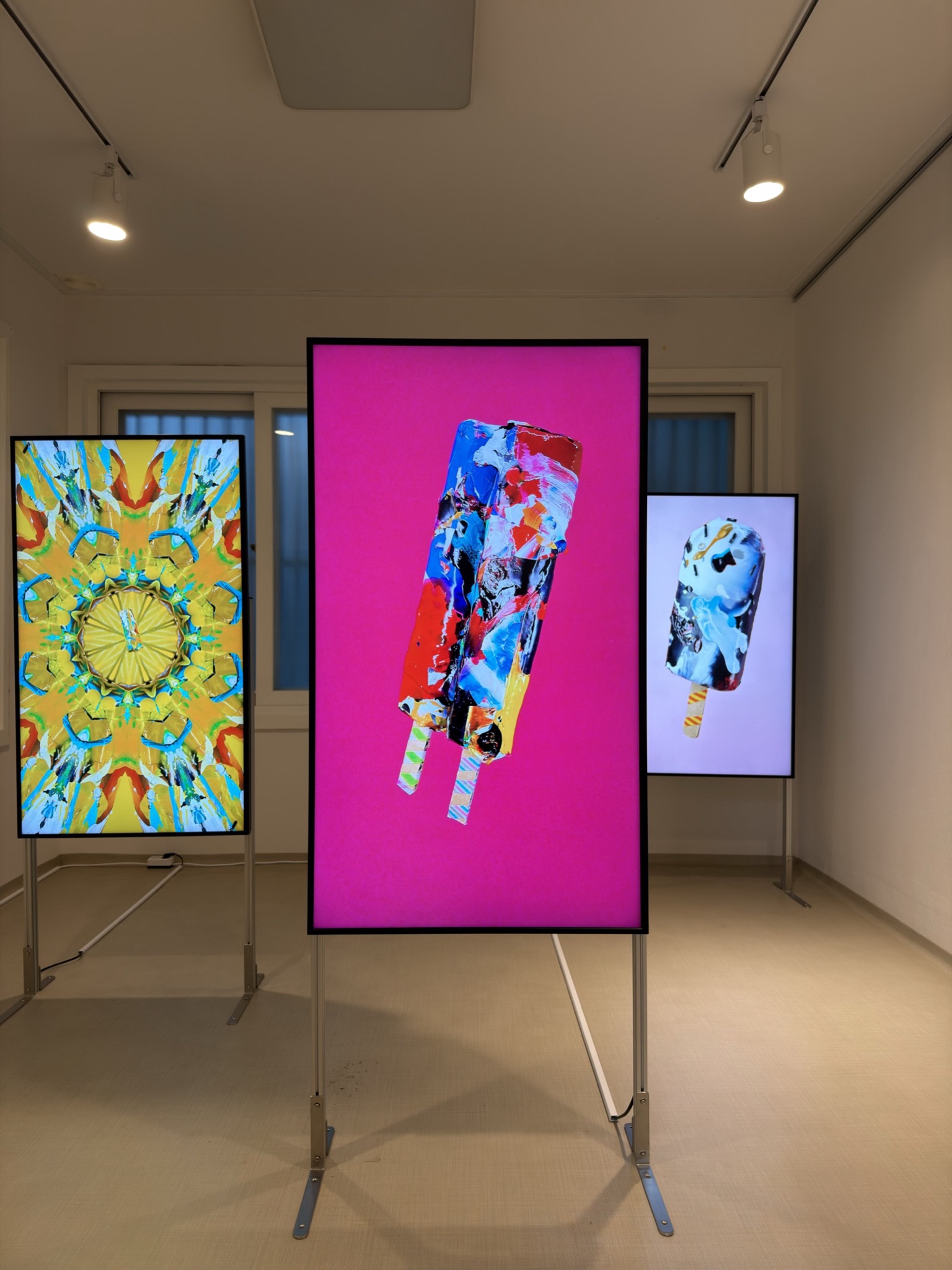
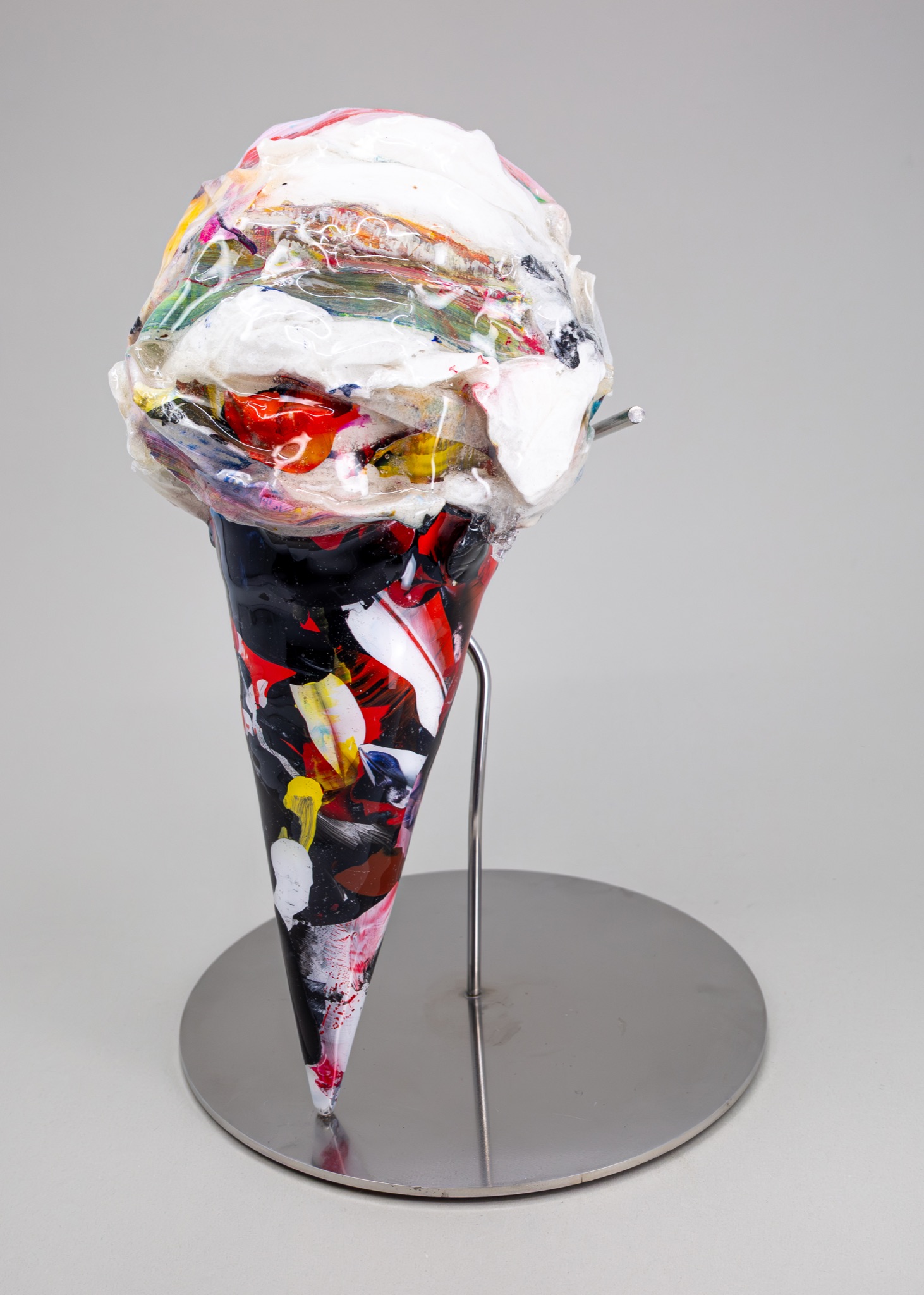
How is Minseok's ice cream made? First he builds a core of urethane resin in the shape of a cone. Over it he wraps and layers the fragments of acrylic paint that fell from his paintings, building up an imagined ice cream. Once the form is finished he coats and hardens the surface in clear resin, and a stainless-steel base quietly holds it up from below. So this ice cream is ice cream only on the outside; inside, it is filled with paint fallen from one painter's time.
Here the heart of the series appears. Real ice cream melts. It melts and is gone. For Minseok that melting is a metaphor for forgetting — the sweeter the memory, the more it simplifies with time, distorting and thinning little by little. What we actually hold from a childhood summer is not the whole season but a few blurred, altered fragments; even those are not complete.
And so Minseok refuses that melting. His ice creams do not melt — not one of them, not ever. They cannot be eaten, have no scent, are not cold, and above all do not disappear. To hold the very symbol of what melts away in a substance that will not melt — to freeze memory against forgetting. Sculpture is, in the end, a craft that resists time, and Minseok gave that craft to the thing most vulnerable to it.
It Does Not Melt in the Digital, Either
This will to keep things from melting reaches past matter and into the screen. Minseok moves the ice cream into video, into data. What is striking is his method. He does not imitate ice cream with 3D graphics. He sculpts the real object from acrylic paint, hangs it in the air in a small studio, and films it turning. What you see on screen is not a virtual picture but the record of real matter. In this way the ice cream takes on another body — data — inside the digital world, and there too becomes a storehouse of memory that never melts.
This concept condensed into a single room in the spring of 2026, in Minseok's space 《This Is Not an Ice Cream》 at ARTLAB in Busan (Loop Lab Busan 2026, a two-person exhibition with Bak Ja-yong, 《Emotion Does Not Stand Still. Memory Is Not Fixed.》). The room divides the structure of memory into three axes. On three vertical screens at the front, ice-cream videos repeat without sound; to the right, a real sculpture inside an acrylic tube is seen refracted through water and a special film, warping into a different shape each time the viewer turns around — the real thing is plainly there, yet the image we grasp is always blurred. And before the device on the left, ⟨Ice Cream Made by Memory⟩, when the viewer waves a hand the video runs backward as if into the past, fades and grays, until one ice cream among many is chosen and kept. Memory does not store the original as it was; it erases, selects, and overlays, rebuilt anew each time and never the same as the original — and Minseok sets that imperfect reconstruction working before our eyes, at the viewer's fingertips.
A Place in Public
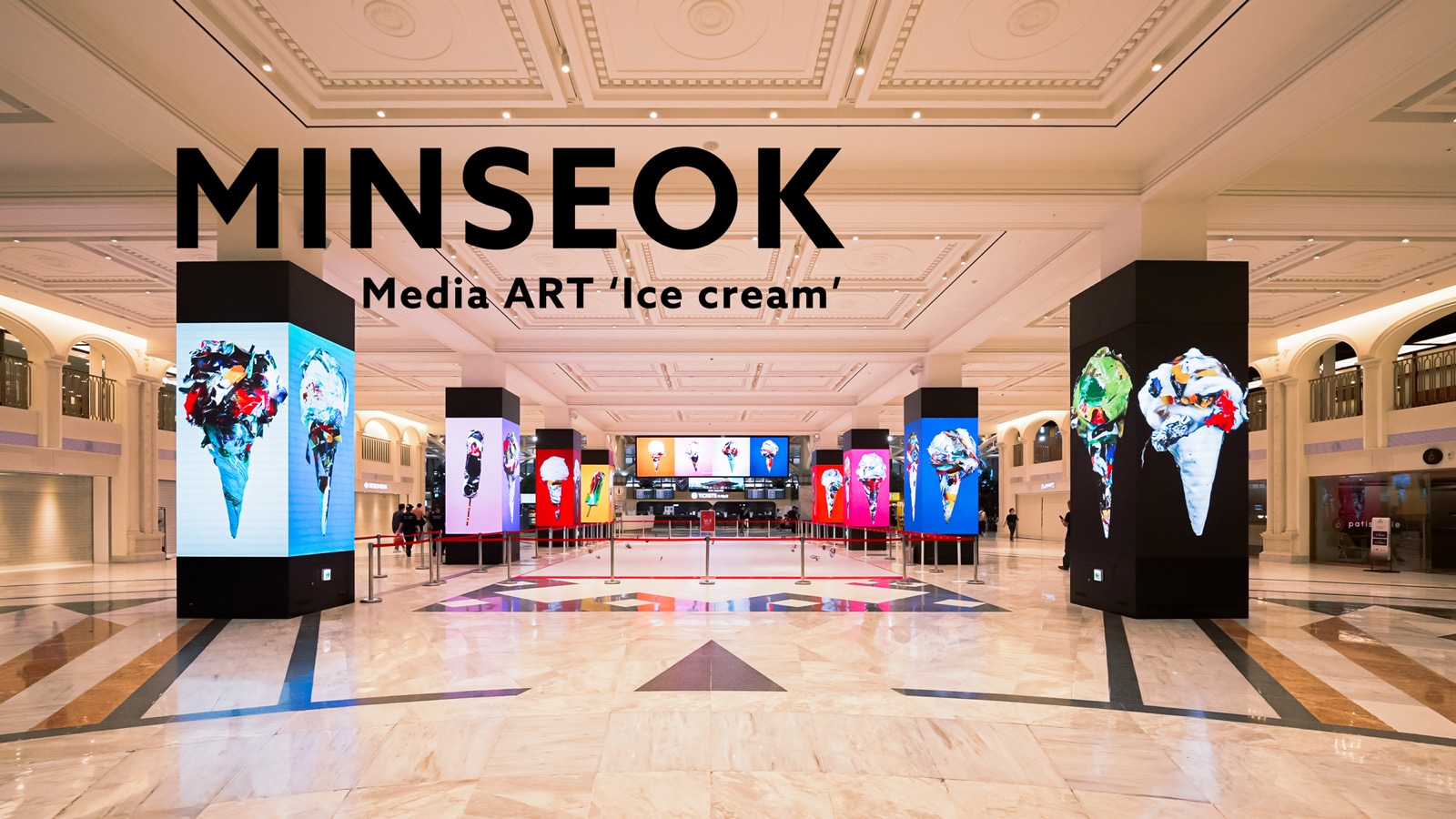
Where Minseok's ice cream has been set tells us what the work has been read as. In the summer of 2024, his ice-cream videos flowed above the passing crowds on the large screens of Seoul's Central City (《The Light at Summer's End》), and his ice creams were set down in Starfield City Myeongji in Busan — a shopping mall where people actually buy and eat ice cream (《JOY ICE CREAM》). Not the white wall of a museum, but the middle of the everyday, where memory is actually made. An object that stores memory does its work only when it is placed where memory is born. If the car paintings stood the viewer before the canvas, the ice cream walks into the viewer's steps and, all at once, wakes their childhood. It is through this manner of meeting that the series has come to be read, all along, as a 'vessel for memory.'
To the painter of the race, then, ice cream is not a detour but a complement. What speed misses as it rushes past — the tasting that requires a stop, the brief now before the melting — this series takes up in its place.
And yet the two worlds do not fold into a single system. The speed of the car belongs to adulthood; it is anxious, and it drives only forward. The sweetness of ice cream belongs to childhood; it is warm, and it holds still. The temperatures of feeling are plainly different. Rather than force the two into one, Minseok joins them only by the most honest of threads — material: the painting that warps as it races forward, and the sculpture that hardens from the paint it sheds to look back.
Why ice cream, of all things, is not in itself a grand idea. It is because our memory is not complete. With time a sweet recollection shifts its shape and fades. To give that imperfect memory a form, he borrows the ice cream — a shape familiar and symbolic to everyone. As with Proust's madeleine, a single thread of scent can suddenly call back a summer — its content already blurred, yet the sensation flooding back whole. A popular, symbolic ice cream is exactly such a medium of memory.
And so what happens before this object is, unexpectedly, simple and joyful. The viewer knows it is not ice cream, and gladly sees it as ice cream all the same. In that brief play — knowing better, yet choosing to believe — each person's own memory quietly surfaces. The sentence 'this is not an ice cream,' then, is not a warning but an invitation. This is not an ice cream. But for a moment, it becomes yours.
The next note, ⟨Reading MINSEOK No.5⟩, is the story of a painter who turns the canvas around. ⟨Reversed Boundary⟩ — on the quiet reversal that holds out, to us who have lived seeing only the front, the back a painting has hidden all its life.
References
· Minseok artist notes — ⟨Ice Cream⟩ sculpture and media-art series · minseok.gallery · Marcel Proust, 『In Search of Lost Time (À la recherche du temps perdu)』, 1913–1927 — involuntary memory (the madeleine) · René Magritte, 「The Treachery of Images (La trahison des images)」, 1929 — the gap between image and thing (mentioned in text; no plate reproduced) · Jean Baudrillard, 『Simulacra and Simulation (Simulacres et simulation)』, 1981 — the sign without an original (mentioned in text) · 《Emotion Does Not Stand Still. Memory Is Not Fixed.》 — Minseok's space 《This Is Not an Ice Cream》, ARTLAB, Busan, 21 Apr – 2 May 2026 · Loop Lab Busan 2026 (two-person exhibition with Bak Ja-yong) · minseok.gallery · 《The Light at Summer's End》, Seoul Central City, 14 Aug – 13 Sep 2024, presented by ARKO (Arts Council Korea) · Shinsegae Central City (participant: MINSEOK) — artgram.kr · 《JOY ICE CREAM: Sweet Ice Cream That Stores Memory》, Starfield City Myeongji, Busan, 2024 — artist exhibition record · minseok.gallery
All plates in this note are works by Minseok Kang © MINSEOK Studio. Images by living external artists (Magritte and others) are not reproduced, only cited; ideas cited carry only their sources.